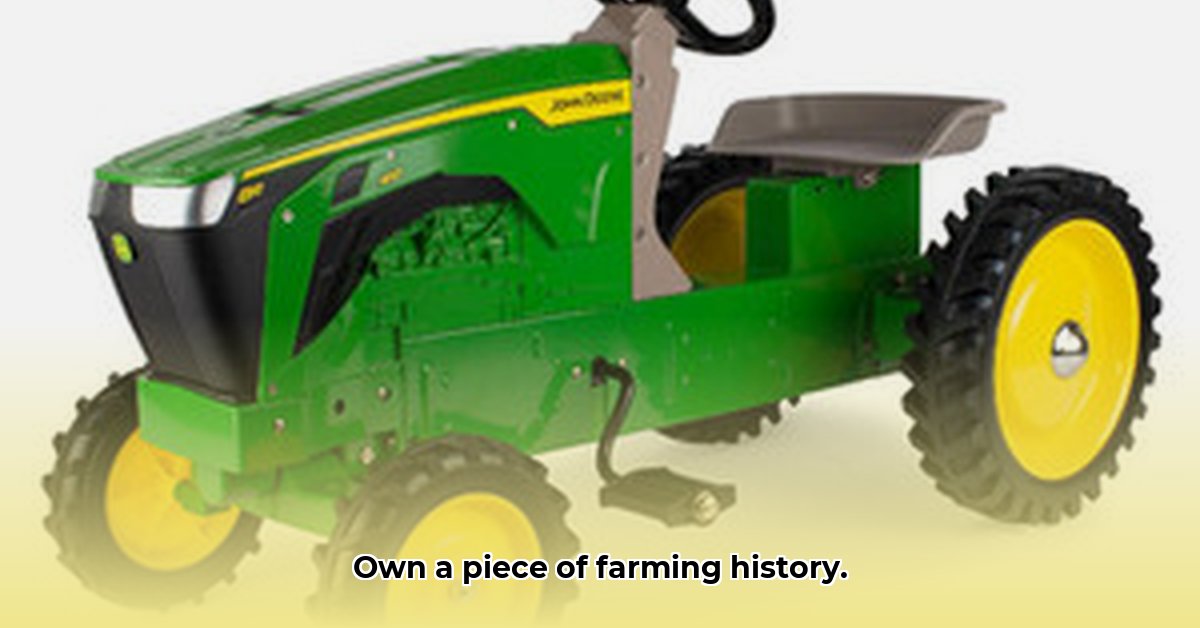
The rumble of a miniature engine, the satisfying squeak of metal on metal, the sheer joy of pretending to plow fields – the John Deere 7020 pedal tractor evokes powerful childhood memories for many. But these aren't just nostalgic toys; they're highly sought-after collector's items, commanding surprisingly high prices depending on condition and authenticity. For more information on similar models, check out this guide on the John Deere 4020. This comprehensive guide will equip you with the knowledge to navigate the world of John Deere 7020 pedal tractors, whether you're a seasoned collector or just beginning your search.
Identifying a Genuine John Deere 7020 Pedal Tractor: Separating the Wheat from the Chaff
Before you even think about buying, you must learn how to distinguish a genuine John Deere 7020 from a reproduction. A genuine tractor can fetch a significantly higher price, making authentication crucial. Here's how to tell the difference:
Paint and Decals: Examine the paint job closely. Is it even and vibrant, or patchy and uneven? Authentic models typically boast a professional-looking finish. Scrutinize the decals; are they crisp, accurately placed, and free from peeling or fading? Poorly applied decals are a major red flag.
Steering Mechanism: Authentic 7020s feature an articulated steering system; the wheels turn independently. Test the steering – smooth and accurate movement is a good sign, while stiffness or clunkiness suggests a reproduction.
Weight: Genuine 7020s are surprisingly heavy for their size. If it feels unusually light, be wary.
Manufacturer's Markings: Many authentic tractors were made by Ertl. Look for their markings—these can often help determine authenticity. The placement and style of these markings are vital clues to originality.
Overall Craftsmanship: Pay close attention to the details. Are the tires properly molded? Are the pedals and seat securely fastened and well-made? Poor craftsmanship points toward a counterfeit.
Assessing Condition and Value: From Barn Find to Museum Piece
Once you've identified a potential 7020, assessing its condition is paramount to determining its value. Use the following scoring system as a guideline:
| Condition | Score | Value Impact |
|---|---|---|
| Mint | 10 | Top dollar! Pristine, showroom condition. |
| Excellent | 8-9 | Almost perfect; might have very minor blemishes. |
| Good | 6-7 | Shows some wear, like light scratches or minor paint chips. |
| Fair | 4-5 | Noticeable wear and tear; some paint might be missing or damaged. |
| Poor | 1-3 | Significant damage; possibly missing parts; likely needs restoration. |
While online marketplaces like eBay offer price insights, remember that these are just starting points. Condition is the most significant factor influencing value. Prices fluctuate, so thorough research before buying or selling is always recommended. Has anyone ever told you that the value of vintage toys is often tied to their condition?
Finding Your Dream John Deere 7020: Embark on the Hunt!
Where can you find these coveted tractors?
Online Marketplaces: Sites like eBay are treasure troves of collectibles, but always check seller feedback and shipping costs—these tractors are heavier than you expect!
Specialized Toy Stores and Antique Shops: Local toy stores specializing in vintage or collectible toys, along with antique malls and flea markets, can yield surprising finds.
Online Collector Forums: Engaging with online communities dedicated to vintage toys or farm toys provides invaluable advice and potential leads on available tractors.
Word of Mouth: Let your network know you're searching; you never know who might have a hidden gem!
Selling Your John Deere 7020 Pedal Tractor: Time to Part Ways?
Selling your 7020 requires a strategic approach:
High-Quality Photos: Showcase your tractor with plenty of detailed, high-resolution photos, highlighting its condition.
Honest Description: Be completely transparent about the tractor's condition; honesty builds buyer trust.
Competitive Pricing: Research comparable tractors to set a fair price. Overpricing will hinder your sale.
Safe Shipping: Packing and shipping a pedal tractor is a challenge. Use robust packaging and a reputable shipping service; consider insurance.
Caring for Your John Deere 7020 Pedal Tractor: Preserving the Legacy
Proper care ensures your tractor remains a cherished piece for years to come:
Regular Cleaning: Use a soft cloth and mild soap; avoid harsh chemicals that can damage the paint.
Proper Storage: Store it in a cool, dry place, away from sunlight and temperature extremes.
Minor Repairs: Address small problems promptly to prevent larger issues later.
Professional Restoration (If Needed): If major restoration is required, seek a qualified professional specializing in vintage toys.
Owning a John Deere 7020 pedal tractor is more than just owning a toy – it's owning a piece of history. Begin your search, and enjoy the thrill of the hunt!